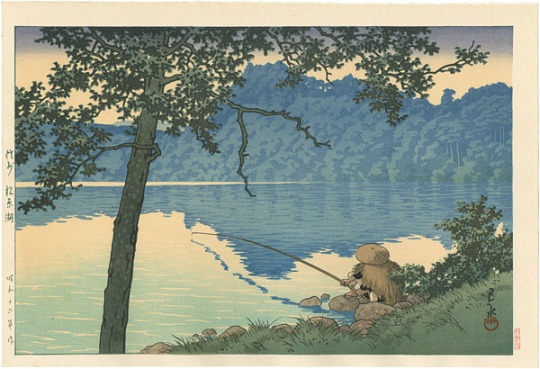
Kawase Hasui, Matsubara Lake, 1941
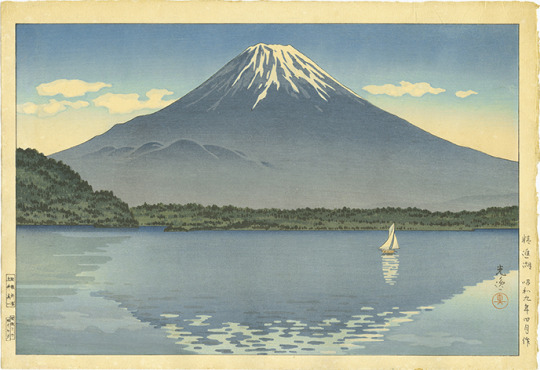
Tsuchiya Koitsu, Lake Shojin, 1934
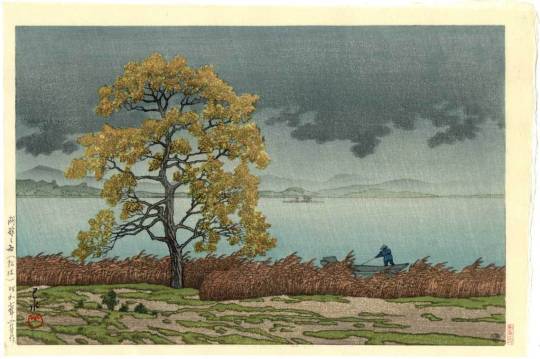
Kawase Hasui, Rain on Lake Matsume, 1932
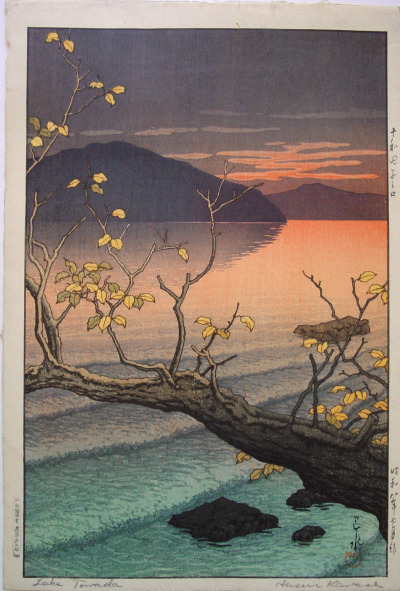
Kawase Hasui, Nenokuchi, Towada, 1933
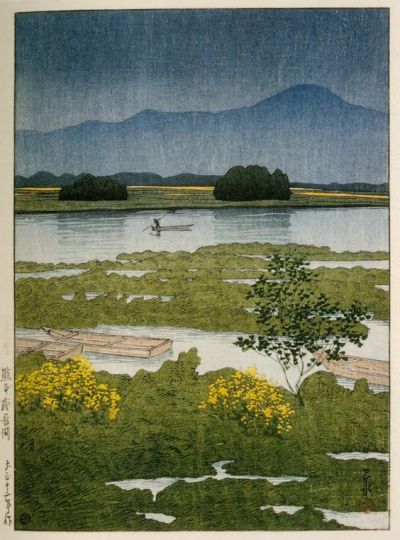
Kawase Hasui, Lake Ezu in Kumamoto, 1923
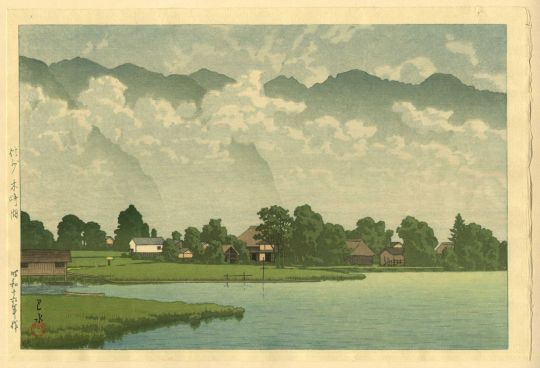
Kawase Hasui, Kisaki Lake in Shinsu, 1941
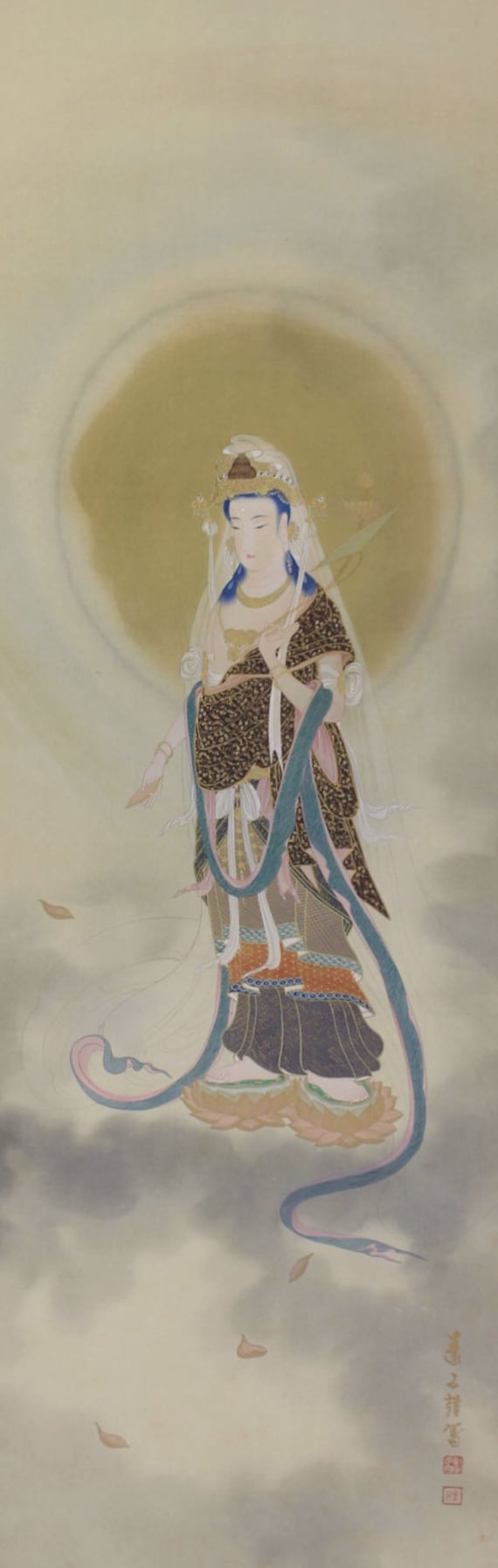 |
Guanyin is the Bodhisattva associated with compassion as venerated by East Asian Buddhists, usually as a female. The name Guanyin is short for Guanshiyin, which means, "Observing the Sounds (or Cries) of the World". She is also sometimes referred to as Guanyin Pusa, literally "Bodhisattva Guanyin". Some Buddhists believe that when one of their adherents departs from this world, they are placed by Guanyin in the heart of a lotus then sent home to the western pure land of Sukhāvatī (Ref Wikipedia). |
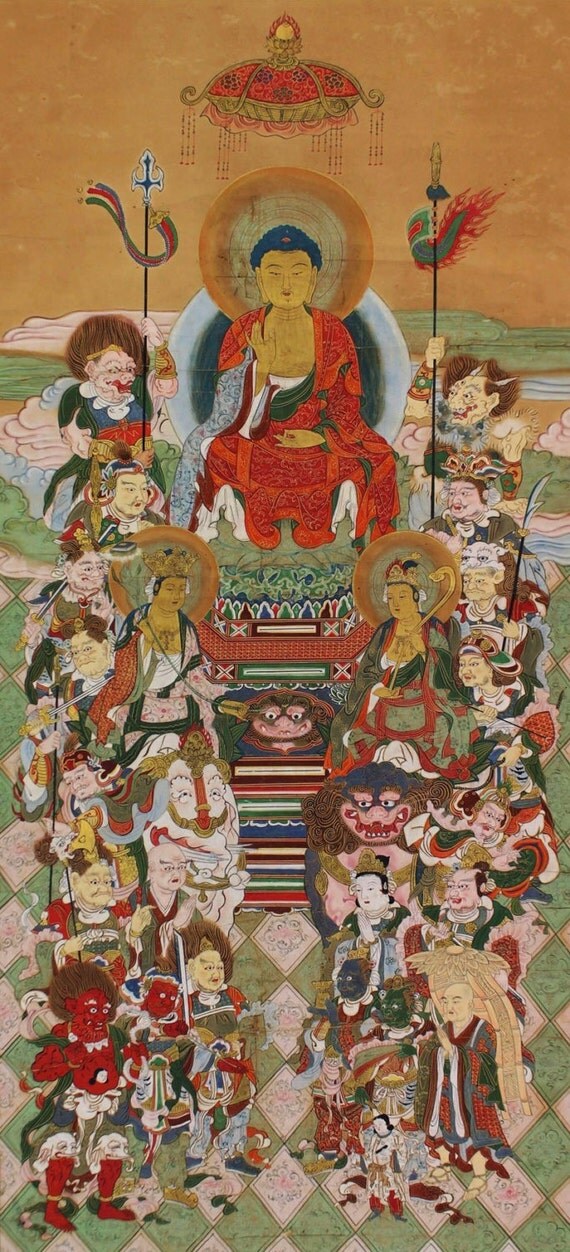 |
Shaka (S:Sakyamuni) is seated on a throne beneath a jewelled canopy, flanked by the Bodhisattvas Fugen (S:Samantabhadra) and Monju (S:Manjusri) mounted on an elephant and lion respectively. In attendance are four additional deities and the 'sixteen benevolent deities' (J:Juroku zenjin), in rows of eight on either side. They protect the 'Daihannya haramitta kyo', the Sutra of Great Wisdom. |
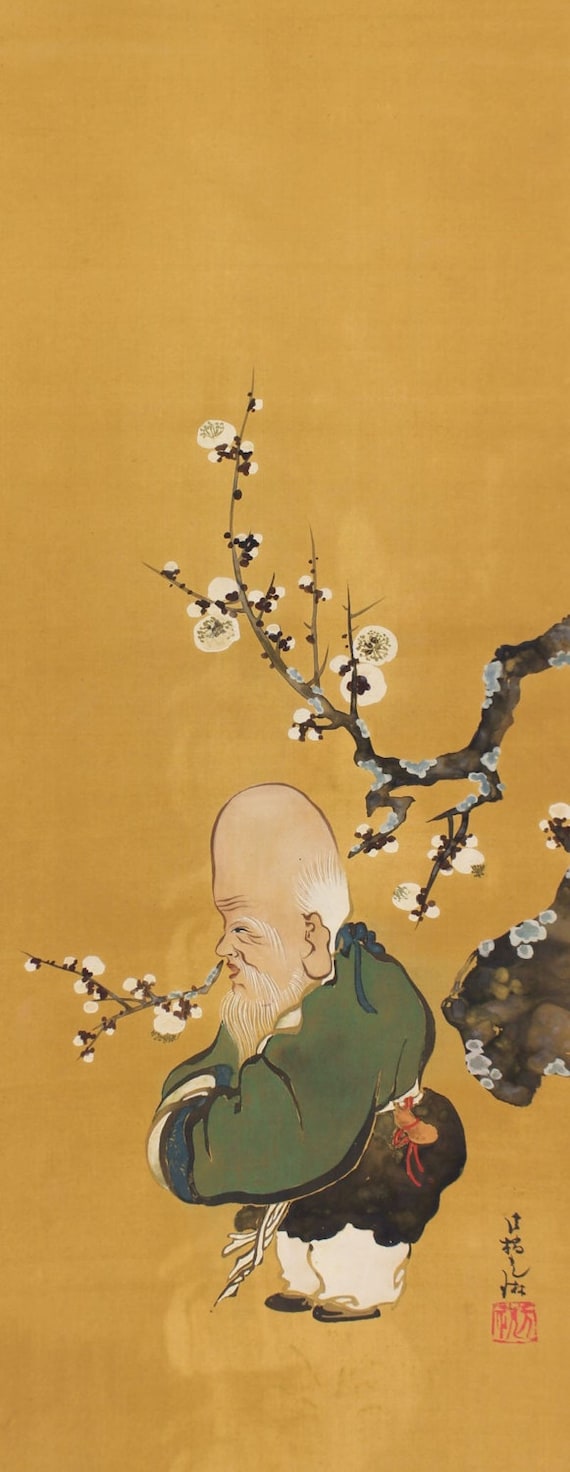 |
Fukurokuju. Painted with ink and pigments on silk. In Japan, Fukurokuju (from Japanese fuku, "happiness"; roku, "wealth"; and ju, "longevity") is one of the Seven Lucky Gods in Japanese mythology. Signed Korin and sealed. It is attributed to Ogata Korin. Ogata Kōrin (1658 – 1716) was a Japanese painter of the Rinpa school. Kōrin broke away from all tradition and developed a very original and distinctive style of his own, both in painting and in the decoration of lacquer. The characteristic of this is a bold impressionism, which is expressed in few and simple highly idealized forms, with an absolute disregard for naturalism and the usual conventions. An artist of the Rinpa school, he is particularly known for his gold-foil folding screens. A screen in the Museum of Fine Arts, Boston depicting Matsushima is a particularly famous work, and his "Irises" in the Nezu Museum is a National Treasure of Japan. |
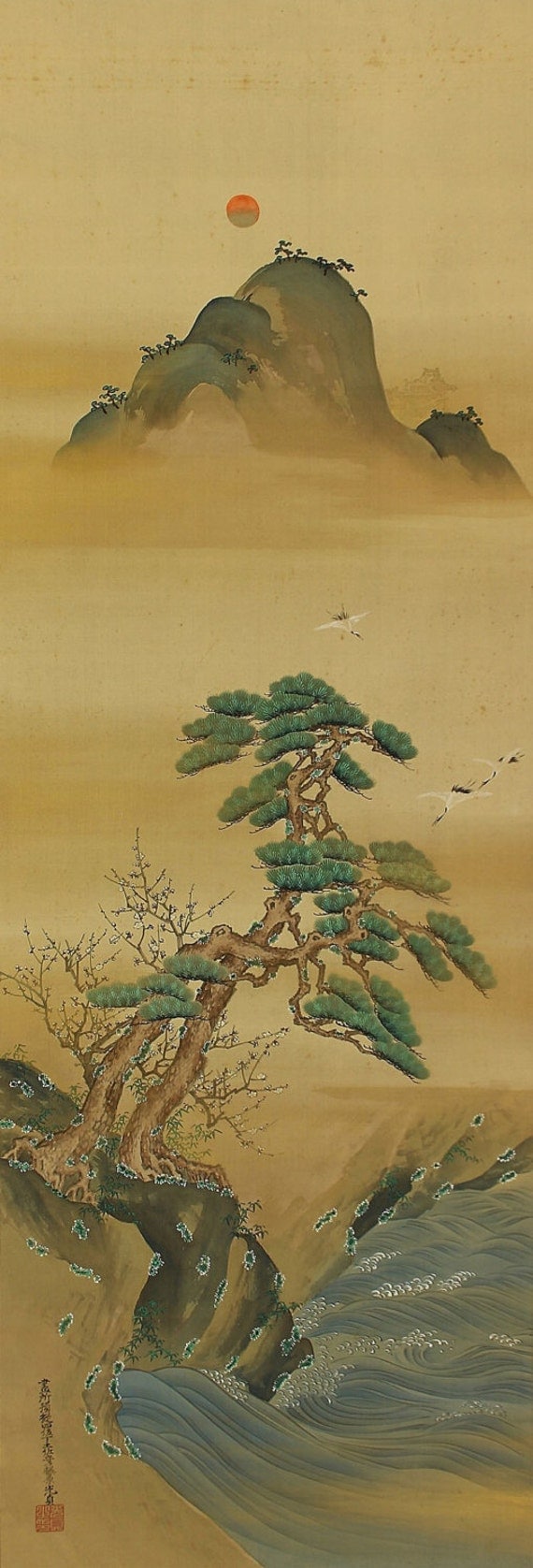 |
In Chinese mythology, the mountain is often said to be the base for the Eight Immortals, or at least where they travel to have a banquet. Supposedly, everything on the mountain seems white, while its palaces are made from gold and platinum, and jewelry grows on trees. There is no pain and no winter; there are rice bowls and wine glasses that never become empty no matter how much people eat or drink from them; and there are magical fruits growing in Penglai that can heal any disease, grant eternal youth, and even raise the dead. The signature reads Tosanomori (the load of Tosa) Mitsusada. Mitsusada Fujiwara (1738-1806) also known as Mitsusada Tosa was born as the second son of Tosa Mitsuyoshi. In 1754 he was retained as a court painter. In the 1760 he painted fusuma (sliding doors) for the court, and in 1789, when the Kyoto Imperial Palace was remodelled, he again painted fusuma sliding doors. Mitsusada was a highly esteemed painter and is generally considered to have revived the Tosa school of painting. |
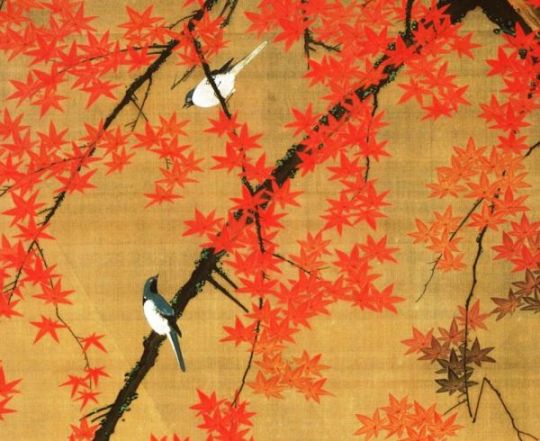 |
| by 伊藤若冲 Jakuchu Ito (1716 - 1800) 紅葉小禽図 Autumn Leaves |
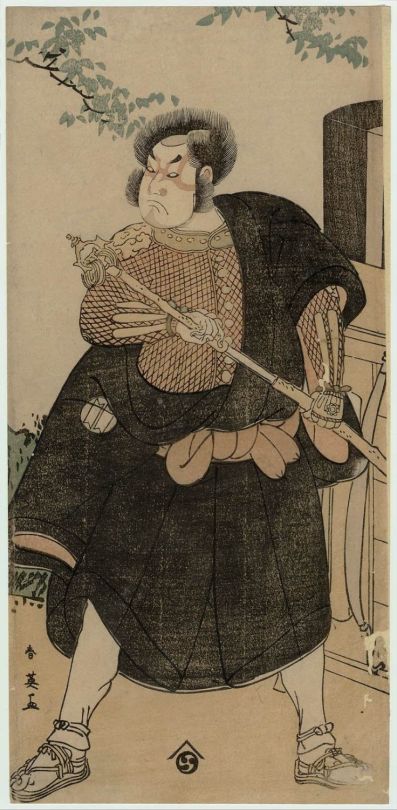 |
| Kaikoku no Shugyosha, an ascetic, in reality Fuchibe Iga no Kami |
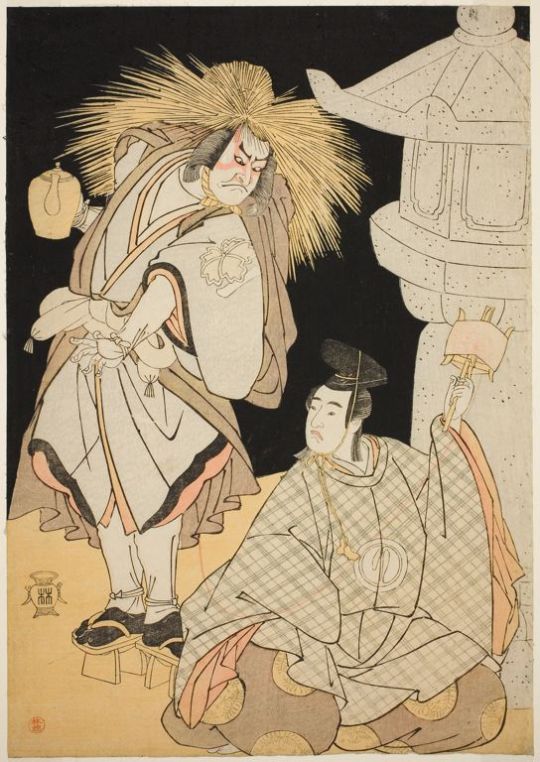 |
| Osada Taro Kagemune (in Reality Hatcho Tsubute no Kiheiji) in the Guise of a Lamplighter of Gion Shrine Part and Komatsu no Shigemori 1785 |
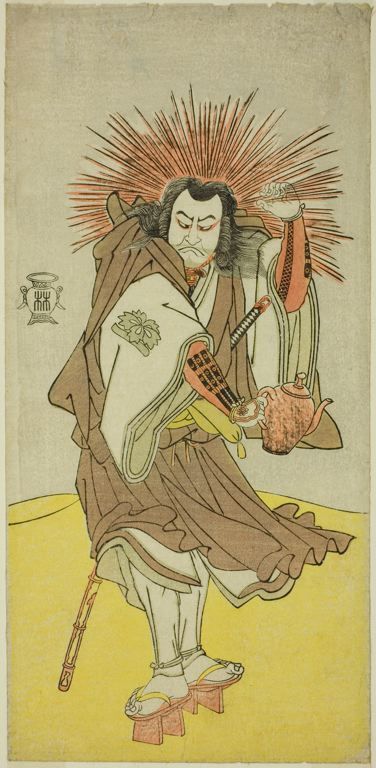 |
| Osada no Taro Kagemune (in Reality Hatcho Tsubute no Kiheiji), in the Guise of a Lamplighter of Gion Shrine 1785 |