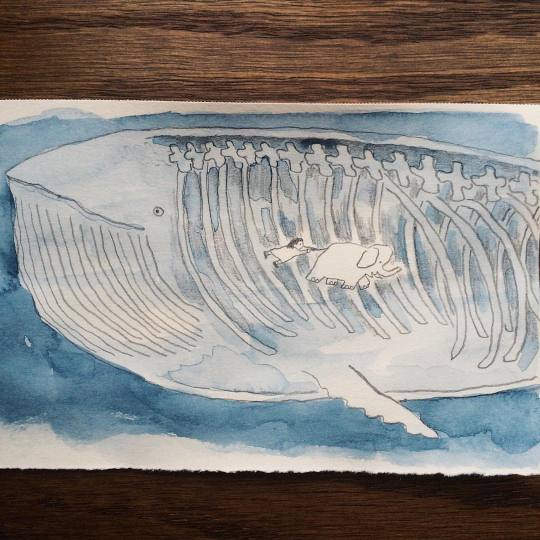
Los peces nacen en el agua, el hombre nace en el Tao.Si los peces, nacidos en el agua, buscan la sombra profunda del estanque o la alberca, todas sus necesidades son satisfechas.Si el hombre, nacido en el Tao, se hunde en la profunda sombra de la no-acción, para olvidar la agresión y las preocupaciones, no le falta nada, su vida es segura.
Moraleja: "Todo lo que necesita el pez es perderse en el agua.Todo lo que necesita el hombre es perderse en el Tao".

AVISO

queridos amigos los haikus que humildemente escribo están en este sitio: www.haikusilvestre.wordpress.com
gracias ! Namasté
Mostrando entradas con la etiqueta art. Mostrar todas las entradas

16 ago 2016

Instead of doing a hundred things half-heartedly, do one thing whole-heartedly.

...

Title: Moon-Water Bodhisattva Kuanyin
Place: China, Tangut State of Xi -Xia, Khara-Khoto
Date: Early 12th century

Be who you are, but don’t hurt others.

...

Title: Buddha Amitabha
Place: China, Tangut State of Xi -Xia, Khara-Khoto
Date: 13th - 14th century
Technique: roll on silk

There are realistic and religious issues in human life. The solution to the realistic issues only meets temporary needs, yet that to the religious issues can satisfy the permanent demands. Master Jiqun

...

Double-Headed Buddha
Place: China, Tangut State of Xi-Xia, Khara-Khoto
Date: 13th-14th century
Archaeological site: Suburgan, Khara-Khoto
Material: clay, with mineral paints and gilding


Hay temas realistas y religiosos en la vida humana. La solución a los problemas realistas sólo satisface las necesidades temporales, sin embargo, la de las cuestiones religiosas puede satisfacer las demandas permanentes.

10 ago 2016

Hongzhi Zhengjue


Withdraw now from
the invisible pounding and weaving
of your ingrained ideas.
If you want to be rid of this
invisible turmoil, you must just sit
through it and let go of everything.
Attain fulfillment and illuminate thoroughly.
Light and shadow altogether forgotten.
Drop off your own skin,
and the sense-dusts will be fully purified.
The eye then readily discerns the brightness.
— Hongzhi Zhengjue

***

Retirate ahora
del golpeteo invisible y el tejido
de tus ideas arraigadas.
Si deseas deshacerte de esta
agitación invisible, tendrás que sentarte
a través de ella y dejar todo de lado .
Llegar a realizarse e iluminar a fondo.
Luz y sombra por completo en el olvido.
Deja tu propia piel,
y los sentidos-polvos estarán completamente purificados.
El ojo luego discierne fácilmente el brillo.
- Hongzhi Zhengjue


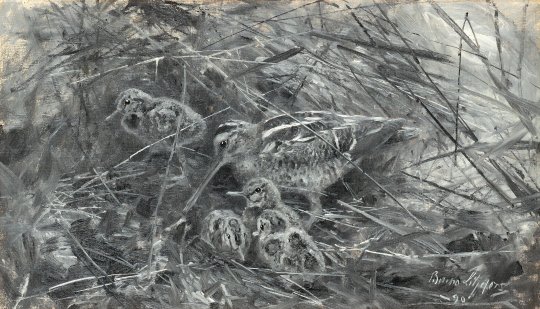
art ... Bruno Liljefors (1860-1939) - Woodcock with chicks, oil on canvas, 32 x 56 cm.

When you do something, you should burn yourself completely, like a good bonfire, leaving no trace of yourself. – Shunryu Suzuki

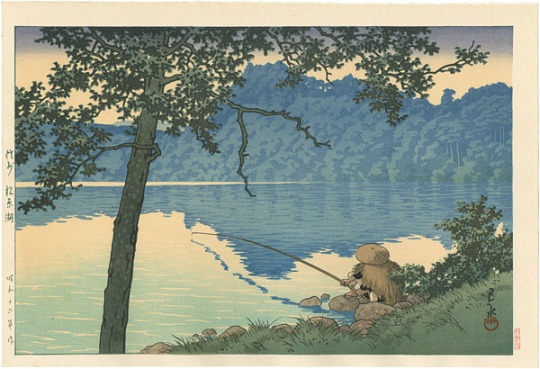
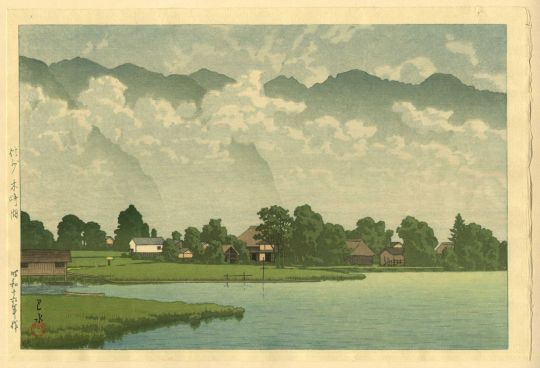
Kawase Hasui, Matsubara Lake, 1941

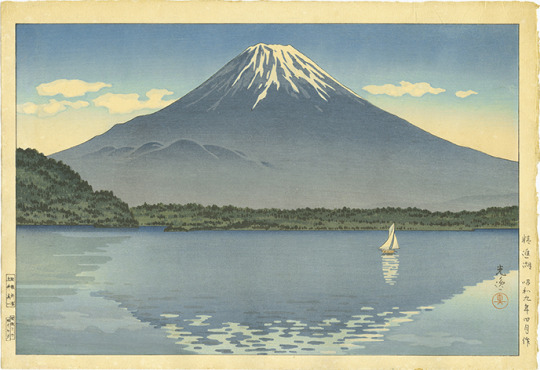
Tsuchiya Koitsu, Lake Shojin, 1934

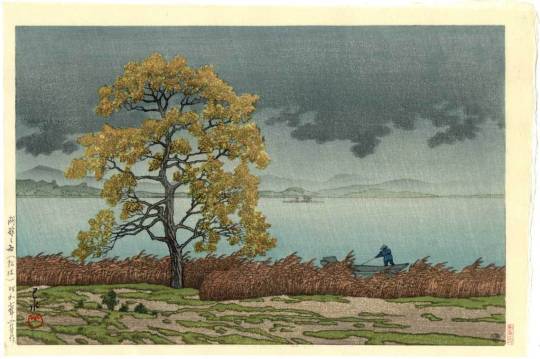
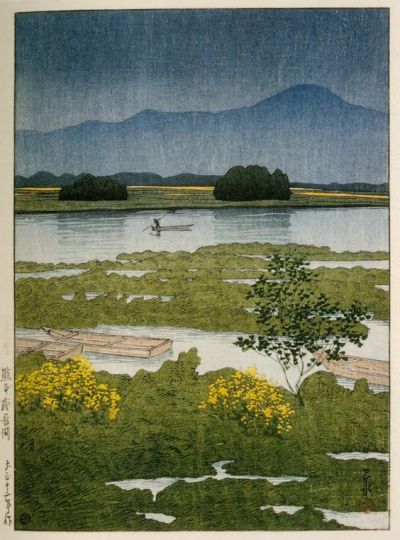
Kawase Hasui, Rain on Lake Matsume, 1932 

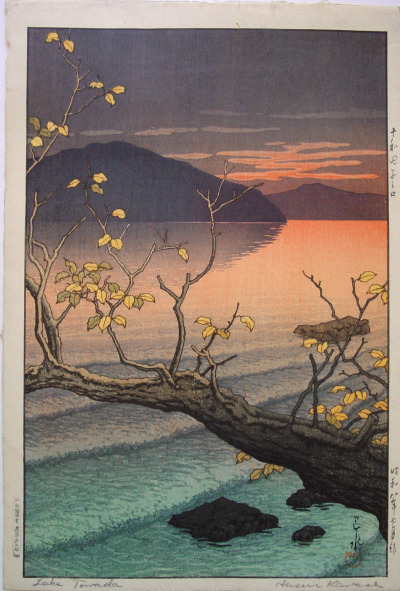
Kawase Hasui, Nenokuchi, Towada, 1933

Kawase Hasui, Lake Ezu in Kumamoto, 1923

Kawase Hasui, Kisaki Lake in Shinsu, 1941


9 ago 2016

kukai

Fridge Magnet Kukai Japanese founder Shingon Sect of Buddhism master calligrapher sculptor Japan

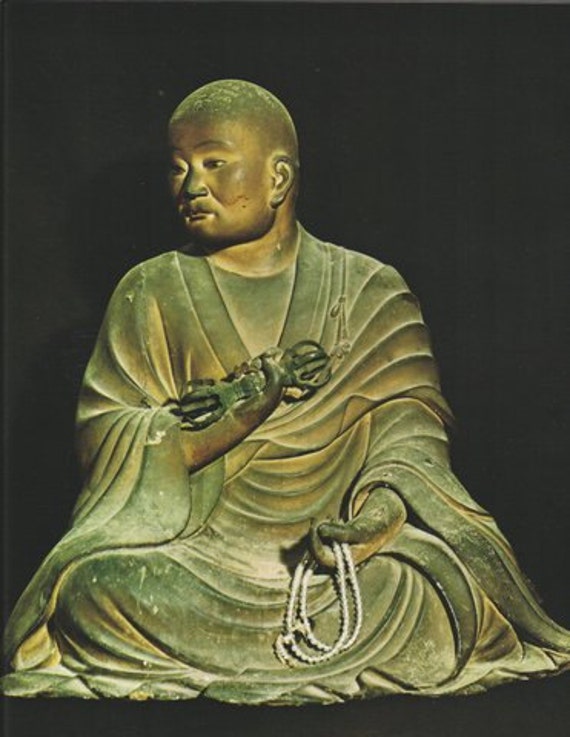
"Twelve years after Kyoto was founded, a young priest named Kukai returned from a brief sojourn in China to establish the Shingon Sect of Buddhism. Over the centuries, this new sect was to become one of the largest and most popular in Japan, and its founder's reputation was to grow apace. Recognized in his own day as a master calligrapher and an accomplished sculptor, Kukai is revered today as the inventor of the kana syllabary, the basis of written Japanese. Legend also credits Kukai, in this ninth-century wood carving, with the introduction of tea to Japan."

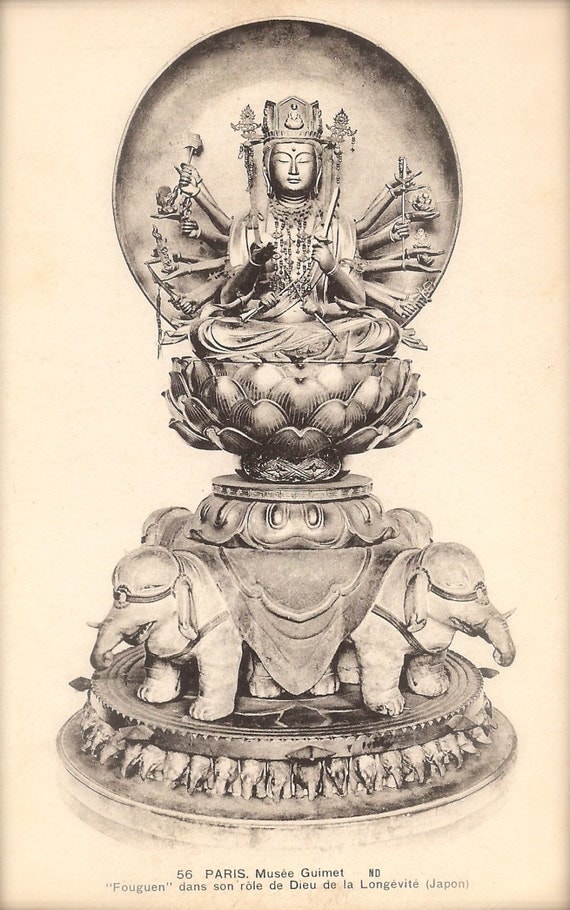
Samantabhadra

普賢延命菩薩 (Bodhisattva Fugen Enmei) Japanese Shingon Buddhism Fine Art Sculpture at The Guimet Museum Paris Original Rare 1910 French Postcard

Samantabhadra (Sanskrit, "Universal Worthy"), is a bodhisattva in Mahayana Buddhism associated with practice and meditation. Together with Gautama Buddha and his fellow bodhisattva Mañjuśrī, he forms the Shakyamuni trinity in Buddhism. He is the patron of the Lotus Sutra and, according to the Avatamsaka Sutra, made the ten great vows which are the basis of a bodhisattva. In China, Samantabhadra is associated with action, whereas Mañjuśrī is associated with prajñā. In Japan, this bodhisattva is often venerated by the Tendai and in Shingon Buddhism, and as the protector of the Lotus Sutra by Nichiren Buddhism.

8 ago 2016

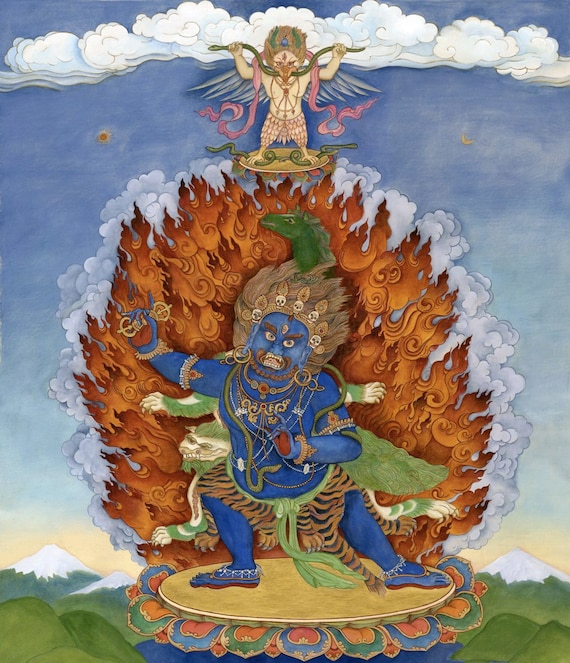
VAJRAPANI & HAYAGRIVA

Vajrapani & Hayagriva, with Garuda above Yidam Deity Buddhist Deity Bodhisattva meditation Dharma protector Temple guardian thangka thanka


Guardian of the Faith


Protector of the teachings and remover of obstacles to the teaching, strong and unwavering, massive and grounded – no one can get past Vajrapani. He stands here in warrior pose, clasping a vajra, symbol of the energy channels of the body, with his other hand raised in the threatening gesture. He represents the power of all the Buddhas of past, present and future. A statue of Vajrapani is placed at the entrance to monasteries and temples to ward of those that would harm the teachings or the sangha, or temple. Vajrapani is sometimes situated next to the Buddha with Avalokitesvara on the opposite side. Here he is the central figure.

Hayagriva is a yidam, or personal protector deity, the fierce form of Avalokitesvara and represents fierce compassion. The Bird-man above, Garuda, is the eagle of wisdom; he too is here acting as guardian and protector, enemy of the snake race, the nagas lords and ladies of the underworld.

© Laura Santi